


Pest Activity Has No Place in a Healthcare Environment
A single pest sighting inside a healthcare facility can create concern quickly.
Patients and visitors may question the cleanliness of the building.
Employees may become uncomfortable.
Food-preparation areas, storage rooms, treatment spaces, and waiting areas may require immediate attention.
But the pest seen in a hallway is often only the final visible part of a much larger chain of events.
Cockroaches may be associated with moisture, drains, plumbing, food residue, or deliveries.
Rodents may enter through exterior openings or loading areas.
Flies can develop around drains, waste, or organic material.
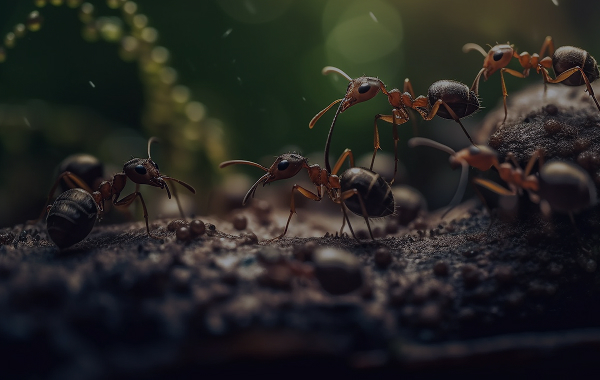
Ants may move into the building in search of water or food.
The strongest healthcare pest-management programs focus on identifying those conditions before activity spreads into sensitive areas.

Get Your Free Pest Control Quote
Tell us what you’re dealing with and a member of the Dave’s and Kevin’s team will help you determine the right solution for your facility.
Protect Patients, Staff and the Integrity of the Facility
Healthcare pest control requires careful attention to both pest activity and the environment in which service is being performed.

Patient & Treatment Areas
These areas require discretion and careful planning.
Pest activity should be investigated quickly while minimizing unnecessary disruption to patients, staff, and normal healthcare operations.

Kitchens & Food-Service Areas
Food storage, preparation, equipment, drains, spills, and waste can create attractive conditions for roaches, ants, flies, and rodents.

Breakrooms & Staff Areas
Coffee stations, refrigerators, vending machines, sinks, trash, and food brought into the facility can support pest activity if conditions are not carefully managed.

Loading & Receiving Areas
Deliveries, open doors, pallets, boxes, and incoming supplies create opportunities for pests to enter a building unnoticed.
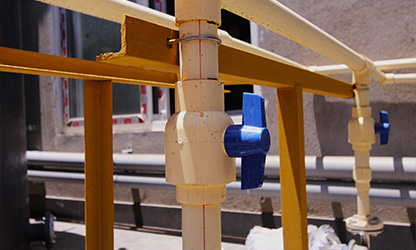
Mechanical & Utility Spaces
Plumbing, heat, moisture, floor drains, utility penetrations, and low-traffic areas can provide shelter and movement pathways for pests.

Waste & Exterior Areas
Dumpsters, landscaping, exterior lighting, standing water, and structural openings can attract pests before they ever reach the interior.
HOW WE MANAGE HEALTHCARE PEST PROBLEMS
A Pest-Management Program Built Around a Sensitive Environment

Evaluate the Facility
We begin by understanding the layout, operating schedule, patient areas, employee spaces, food-service areas, waste handling, loading zones, and other sections of the property where pest risks may develop.


Identify Sensitive and High-Risk Areas
Not every area can be treated the same way.
A mechanical room, kitchen, patient waiting area, and exterior dumpster enclosure each require different considerations.


Focus on Prevention
Structural openings, sanitation, moisture, food storage, waste handling, and deliveries can all affect pest activity.
Correcting these conditions can help reduce the need for repeated reactive service.


Use Targeted Pest-Control Strategies
When treatment is required, it should be focused on the pest, location, and conditions present rather than applying the same approach throughout the entire facility.


Monitor for Recurring Activity
Patterns matter.
Repeated activity around a specific drain, loading area, storage room, or exterior wall can point toward a condition that needs additional attention.

Free Commercial Facility Pest Audit
Schedule a no-obligation commercial pest inspection and receive a review of common pest risk areas. Including: entry points, sanitation concerns, storage zones, exterior conditions and more!
INTEGRATED PEST MANAGEMENT
Why IPM Is Especially Important in Healthcare
Healthcare pest management should rely heavily on prevention.
Integrated Pest Management helps accomplish that by looking beyond individual pest sightings and examining the environmental conditions allowing pests to survive.
That may include moisture, food residue, plumbing, waste, exterior access, storage practices, deliveries, landscaping, or structural openings.
Instead of simply responding every time an insect appears, IPM uses inspection, monitoring, sanitation, exclusion, corrective recommendations, and targeted treatment together.
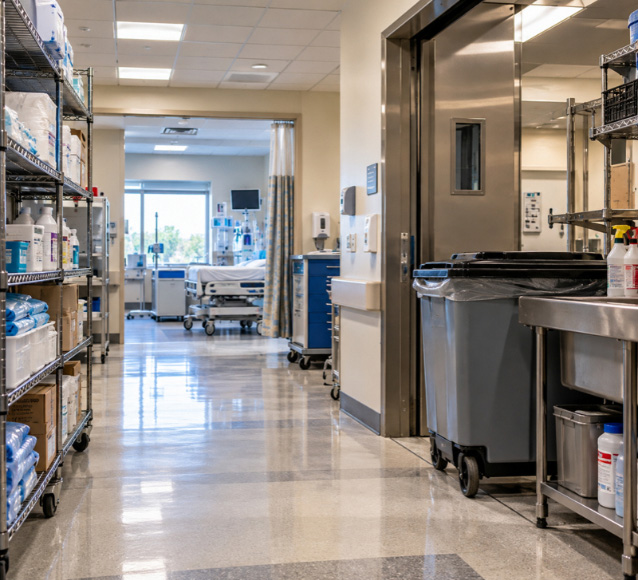
This is particularly valuable in healthcare environments because pest-control decisions need to balance effectiveness with the sensitivity of the surrounding facility.
The objective is to create conditions that are less favorable to pests while using treatment strategically where it provides the most value.
COMMON HEALTHCARE PESTS
Pest Concerns in Healthcare Facilities
Cockroaches
Roaches may become established around plumbing, drains, kitchens, staff areas, storage rooms, and other warm or moist locations.
Rodents
Rodents can enter through structural openings, loading zones, exterior doors, utility penetrations, and other vulnerable areas.
Ants
Food, water, spills, and moisture can attract ants into employee areas, kitchens, patient spaces, and other parts of the facility.
Flies
Drains, waste, organic material, deliveries, and exterior conditions can contribute to fly activity.
Stored-Product Pests
Food storage areas, dry goods, vending supplies, and other stored products should be monitored for pest activity.
Spiders & Stinging Insects
Exterior structures, rooflines, landscaping, and entrances may support spider or stinging-insect activity.
PREVENTION
Prevention Begins With Facility Conditions
Healthcare pest control works best when building management and pest-control professionals work together.
Promptly correcting leaks can reduce moisture.
Proper food storage can reduce available food sources.
Keeping waste areas clean and controlled can decrease attraction.
Maintaining door sweeps and exterior seals can reduce pest entry.
Monitoring deliveries can help prevent pests from being introduced with incoming materials.
Small facility improvements can often have a significant effect on long-term pest activity.
MONITORING & COMMUNICATION
Early Detection Matters
Healthcare facilities should not have to wait until a pest problem becomes obvious.
Monitoring high-risk areas helps identify developing activity before pests move into more sensitive sections of the property.
Clear communication with facility management is equally important.
When employees know where to report pest sightings and those observations are combined with professional inspections, developing patterns become easier to recognize and address.
Local Pest Management for Lafayette Healthcare Facilities
South Louisiana’s heat, humidity, rainfall, and long pest season create an environment where commercial pest activity can develop throughout much of the year.
Healthcare properties may also operate around the clock, making pest prevention especially important.
A facility cannot simply shut down because an insect appears.
That is why healthcare pest management needs to be organized around the operation itself.
Dave’s & Kevin’s works with local businesses and facilities to identify pest risks, understand contributing conditions, and develop a practical approach to long-term pest management.
WHY CHOOSE DAVE’S & KEVIN’S
Professional Pest Management for Sensitive Facilities





Local Experience
Serving Lafayette and Acadiana since 1962.

Inspection-Driven Service
We look for the source and conditions behind pest activity.

Integrated Pest Management
Prevention, monitoring, corrective actions, and treatment work together.

Customized Programs
Service plans should reflect the facility rather than forcing every healthcare property into the same program.
Local Experience
Serving Lafayette and Acadiana since 1962.
Inspection-Driven Service
We look for the source and conditions behind pest activity.
Integrated Pest Management
Prevention, monitoring, corrective actions, and treatment work together.
Customized Programs
Service plans should reflect the facility rather than forcing every healthcare property into the same program.
Healthcare Pest Control Throughout Lafayette & Acadiana
Healthcare Pest Control Throughout Lafayette & Acadiana
Dave’s & Kevin’s provides pest-management services for healthcare properties throughout Lafayette and surrounding Acadiana communities.
Whether you manage a medical office, clinic, healthcare campus, specialized treatment facility, or related operation, we can evaluate the property and help determine an appropriate pest-management strategy.
Your Local Pest Control Company Since 1962
More than six decades in business doesn’t happen without taking care of customers. See what homeowners throughout Lafayette and Acadiana have to say about their experience with Dave’s and Kevin’s Pest Control.
Read More Reviews


Frequently Asked Questions About Healthcare Pest Control
Why is pest prevention so important in healthcare facilities?
Healthcare environments have very little tolerance for pest activity. Prevention helps identify and correct risk conditions before pests become established in sensitive areas.
What areas of a healthcare facility are most vulnerable?
Kitchens, employee breakrooms, loading docks, waste areas, mechanical rooms, drains, storage areas, and exterior entry points can all require attention.
Can commercial pest control be performed around normal healthcare operations?
Service should be planned around the facility and pest issue involved, with the objective of minimizing unnecessary disruption whenever practical.
Why do cockroaches become a problem in healthcare buildings?
Moisture, plumbing, drains, food, deliveries, structural access, and protected spaces can all provide favorable conditions.
What is IPM in healthcare pest control?
Integrated Pest Management combines inspection, monitoring, prevention, sanitation, exclusion, corrective recommendations, and targeted treatment.
Should employees report individual pest sightings?
Yes. Even a single sighting can provide valuable information when combined with inspection and monitoring.
Protect the Environment Your Patients
and Staff Depend On
Healthcare pest management should be proactive, discreet, and built around the needs of the facility.
Let Dave’s & Kevin’s evaluate your property and help develop a program designed to identify pest risks early and reduce recurring problems.
Request a Healthcare Pest Evaluation